


Quick Summary :- Launching a startup without validating your idea can lead to wasted time and resources. MVP development services help early-stage startups build a minimum viable product with essential features, allowing them to test market demand, gather user feedback, and reduce development risks. This guide explores the benefits of MVP development, key features to look for in a development partner, common mistakes to avoid, and how startups can use MVPs to achieve product-market fit and attract investors. By choosing the right MVP development company, startups can launch faster, make smarter product decisions, and build a scalable foundation for future growth.
Introduction
Launching a startup is exciting, but it also comes with significant risks. Many founders invest months and thousands of dollars into building products without validating whether there is actual market demand. This is where MVP development services become invaluable.
A Minimum Viable Product (MVP) helps startups test their ideas with real users before committing to full-scale development. By focusing on core functionality, businesses can gather feedback, reduce risks, and make data-driven decisions.
In this guide, we'll explore how MVP development services help early-stage startups launch faster, validate ideas effectively, and build a strong foundation for future growth.
What Are MVP Development Services?
MVP development services focus on creating a simplified version of a product that includes only the essential features needed to solve a specific problem for users.
Instead of spending months building a complete solution, startups can release a working product quickly, test market demand, and improve the product based on real-world feedback.
Understanding the MVP Approach
The MVP approach follows a simple principle: build, measure, and learn.
Rather than assuming what users want, startups can validate assumptions through actual customer interactions. This strategy reduces development costs and minimizes the risk of launching a product that fails to gain traction.
Why Startups Choose MVP Development
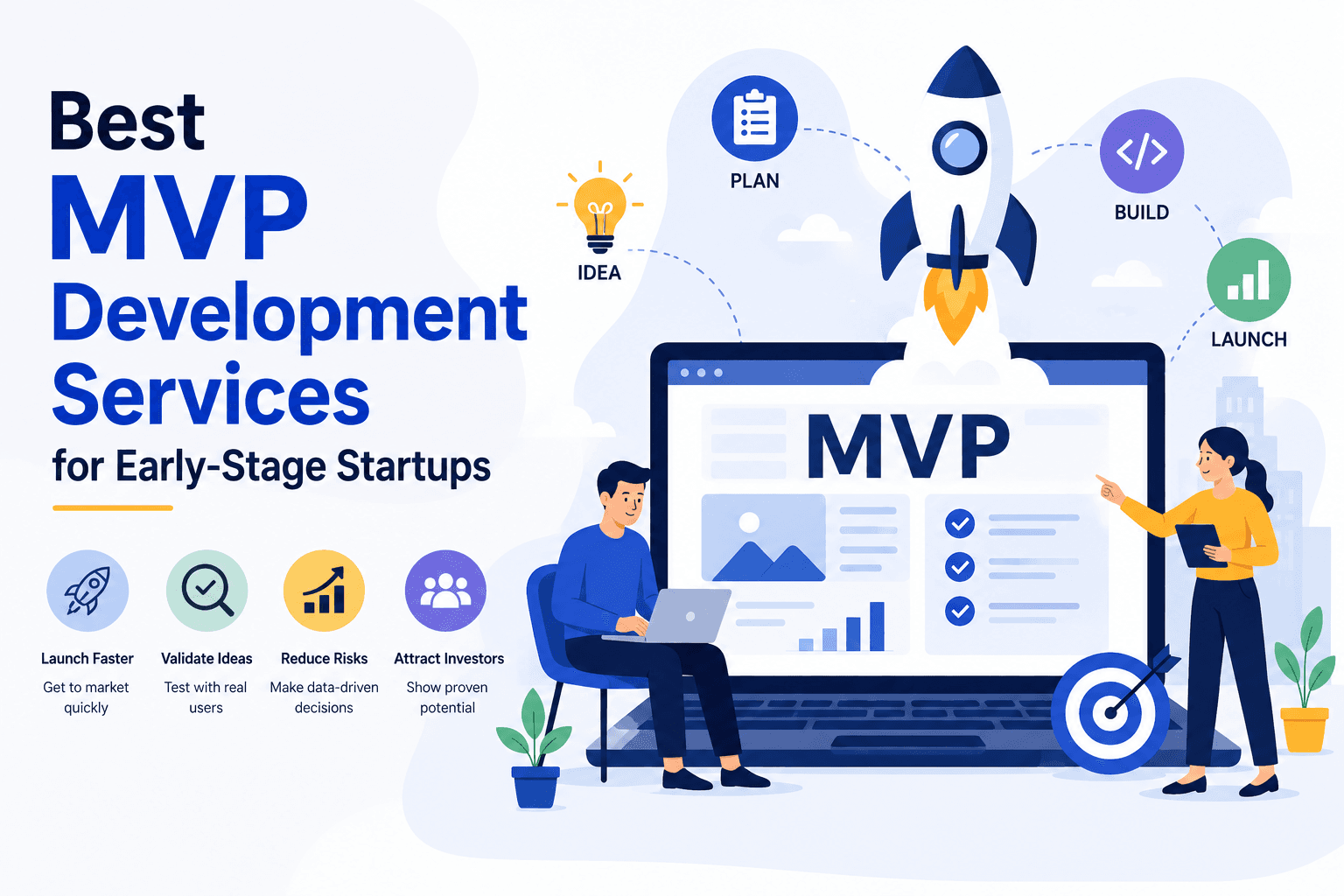
Early-stage companies often operate with limited budgets and resources. MVP development offers several advantages:
- Faster time to market
- Lower development costs
- Early customer feedback
- Reduced business risk
- Better investor confidence
For founders looking to validate an idea before scaling, MVP development is often the smartest first step.
Why Early-Stage Startups Need MVP Development Services
Many successful companies started with a simple MVP before evolving into industry-leading platforms.
Validate Product Ideas Before Investing Heavily
One of the biggest challenges startups face is uncertainty. MVP development services help businesses test product concepts before investing significant resources into development.
By gathering user feedback early, startups can identify what customers truly need and avoid building unnecessary features.
Attract Investors with a Working Product
Investors are more likely to support startups that demonstrate market demand.
A functioning MVP provides tangible proof that customers are interested in the product. It also shows investors that the team can execute and adapt based on user feedback.
Accelerate Product Launches
In competitive markets, speed matters.
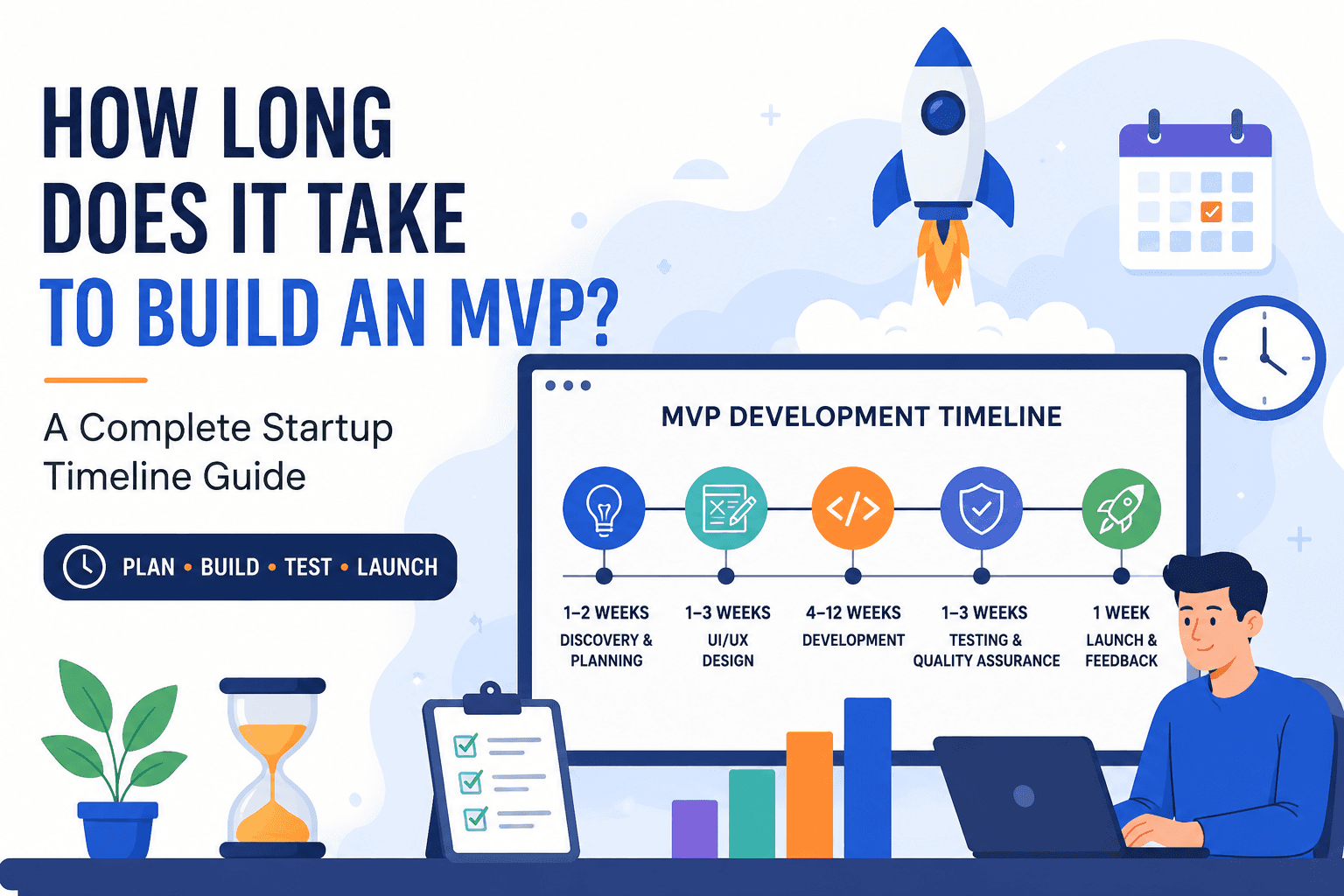
Instead of waiting six to twelve months to launch a complete product, startups can release an MVP within a shorter timeframe and start collecting valuable market insights immediately.
Key Features of Professional MVP Development Services
Not all MVPs are created equal. Professional MVP development companies follow a structured process to maximize the chances of success.
Product Discovery and Market Research
Every successful MVP starts with understanding the target audience.
This phase includes:
- Market research
- Competitor analysis
- User persona development
- Feature prioritization
Businesses looking to build innovative solutions often combine MVP planning with custom software development services to ensure long-term scalability.
UI/UX Design for Early Adoption
User experience plays a crucial role in MVP success.
An intuitive interface helps early adopters understand the product quickly and encourages engagement. Professional MVP app development services focus on creating user-friendly experiences that support customer retention.
Agile Development Methodology
Most MVP software development projects follow Agile principles.
This approach enables:
- Faster releases
- Continuous feedback loops
- Flexible development cycles
- Ongoing improvements
Agile MVP development allows startups to adapt quickly as market requirements evolve.
Scalability Planning
Although an MVP focuses on essential functionality, it should still be built with future growth in mind.
Experienced development teams choose scalable technologies and architecture to support future feature expansion.
Types of MVP Development Services Startups Should Consider
Different startup ideas require different MVP approaches.
Web Application MVP Development
Web-based MVPs are ideal for:
- SaaS platforms
- Marketplaces
- Online booking systems
- Business management tools
Many founders begin with a web MVP because it allows them to reach users quickly across multiple devices.
Mobile App MVP Development
Mobile-first startups often choose MVP app development services to validate demand in app marketplaces.
Popular use cases include:
- Healthcare applications
- Fitness platforms
- FinTech solutions
- Social networking apps
For startups targeting both Android and iOS users, cross-platform frameworks can reduce development costs significantly.
Custom Software MVP Development
Some startups require highly specialized solutions.
Custom MVP development services help businesses create unique products tailored to specific industries, workflows, or customer requirements.
How to Choose the Best MVP Development Services Provider
Selecting the right development partner can determine whether a startup succeeds or struggles.
Evaluate Startup Experience
Look for companies that have experience working with startups.
A strong portfolio should demonstrate successful MVP launches, product validation strategies, and industry expertise.
Assess Technical Expertise
A reliable MVP development company should have expertise in:
- Frontend development
- Backend development
- Cloud infrastructure
- API integrations
- Security best practices
If your roadmap includes future expansion, consider providers that also offer web application development services and long-term product support.
Review Communication and Collaboration
Transparency is critical during MVP development.
Choose a partner that provides:
- Regular project updates
- Agile sprint reviews
- Clear timelines
- Collaborative planning sessions
Check Client Testimonials and Case Studies
Client reviews and case studies provide insight into a company's ability to deliver results.
Look for examples of startups that successfully validated products, secured funding, or achieved product-market fit.
Essential Technologies Used in MVP Development Services
Technology selection can significantly impact development speed and scalability.
Frontend Technologies
Modern MVPs often use:
- React
- Next.js
- Vue.js
These frameworks enable fast development and excellent user experiences.
Backend Technologies
Popular backend solutions include:
- Node.js
- Python
- Laravel
These technologies support rapid development while maintaining performance and flexibility.
Cloud and Infrastructure
Scalable cloud platforms include:
- AWS
- Google Cloud
- Microsoft Azure
Cloud infrastructure allows startups to scale efficiently as user demand grows.
Common Mistakes Startups Make When Building an MVP
Avoiding common mistakes can improve the chances of MVP success.
Adding Too Many Features
An MVP should focus on solving one primary problem.
Feature overload increases costs, delays launch timelines, and makes validation more difficult.
Ignoring User Feedback
Customer feedback is one of the most valuable assets during MVP development.
Startups should continuously collect, analyze, and act on user insights.
Choosing the Wrong Development Partner
Selecting a provider based solely on price can lead to poor product quality and costly delays.
Experience and expertise often provide better long-term value.
Focusing on Perfection Instead of Validation
The purpose of an MVP is learning, not perfection.
Launching quickly and iterating based on user feedback is often more effective than spending months polishing non-essential features.
Benefits of Investing in MVP Development Services
Professional MVP development services provide measurable business advantages:
- Faster product validation
- Lower development costs
- Reduced market risk
- Stronger customer insights
- Better investor confidence
- Faster path to product-market fit
- Scalable product foundations
For startups operating in highly competitive markets, these benefits can significantly improve long-term success rates.
MVP Development Services Process: From Idea to Launch
A structured development process helps startups move from concept to market efficiently.
Discovery and Planning
Teams define business goals, target audiences, and feature requirements.
Wireframing and Prototyping
Designers create user flows and interactive prototypes to validate concepts before development begins.
Development and Testing
Developers build core features while conducting quality assurance testing throughout the process.
User Feedback Collection
Real users interact with the MVP, providing valuable insights into product performance and usability.
Product Iteration and Scaling
Based on feedback, startups can refine features, improve user experiences, and prepare for future growth.
Why Startups Trust Professional MVP Development Services
Building an MVP requires more than technical expertise.
Professional providers offer:
- Strategic product guidance
- Startup-focused development expertise
- Faster delivery timelines
- Scalable architecture planning
- Ongoing support and optimization
These capabilities help startups reduce uncertainty and increase their chances of achieving sustainable growth.
Conclusion
For early-stage startups, success often depends on validating ideas quickly and minimizing unnecessary risk. Investing in professional MVP development services allows founders to launch faster, gather real user feedback, and make informed product decisions before committing to large-scale development.
Whether you're building a SaaS platform, mobile application, or custom software solution, an MVP provides the foundation needed to achieve product-market fit and attract investors. By partnering with an experienced MVP development company, startups can transform innovative ideas into scalable products while maintaining speed, efficiency, and flexibility.
The most successful startups don't start with perfect products-they start with validated ideas. An MVP is the fastest path to finding out what truly works.
Frequently Asked Questions
Costs vary based on complexity, features, technology stack, and development location. Most startup MVPs range from a few thousand dollars to larger investments for advanced solutions.
Most MVP projects can be completed within several weeks to a few months, depending on scope and requirements.
An MVP should include only the core features necessary to solve a primary user problem and validate market demand.
Yes. A properly developed MVP can evolve into a fully featured product through continuous iteration and feature expansion.
A working MVP demonstrates market demand, user engagement, and execution capability, making startups more attractive to investors.
5 min read

Dhruv Patel
Dhruv Patel is the CEO of Zyora Global, bringing a strong technology background and a passion for building scalable digital solutions. With expertise in software development, product strategy, and business growth, he leads the company in delivering innovative web, mobile, AI, and enterprise solutions that help businesses accelerate their digital transformation.