



Quick Summary :- Choosing the best MVP development company is one of the most important decisions for any startup. The right partner helps validate your business idea, prioritize essential features, build a scalable product, and accelerate your time-to-market. When evaluating an MVP development company, focus on their startup experience, technical expertise, product strategy, UI/UX capabilities, communication process, scalability approach, and post-launch support. A reliable MVP development partner not only develops your product but also helps reduce risks, optimize costs, and create a strong foundation for future growth. By selecting an experienced MVP development company, startups can launch faster, gather valuable user feedback, and increase their chances of long-term success.
Introduction
Launching a startup is exciting, but building a full-scale product without validating your idea can lead to wasted time, money, and resources. That's why many successful startups begin with a Minimum Viable Product (MVP). The real challenge, however, is finding the best MVP development company that can transform your idea into a market-ready product while minimizing risks.
A reliable MVP development partner helps you validate your concept, gather user feedback, attract investors, and accelerate your go-to-market strategy. The right company focuses on delivering core features quickly while building a scalable foundation for future growth. Industry best practices emphasize rapid development, user validation, iterative improvements, and scalable architecture as critical factors for successful MVP launches.
In this guide, you'll learn how to choose the best MVP development company for your startup and avoid costly mistakes during the product development journey.
What Is an MVP and Why Does Your Startup Need One?
A Minimum Viable Product (MVP) is the simplest version of a product that includes only the essential features needed to solve a core user problem. Instead of investing heavily in a complete product, startups launch an MVP to validate assumptions and gather real-world feedback.
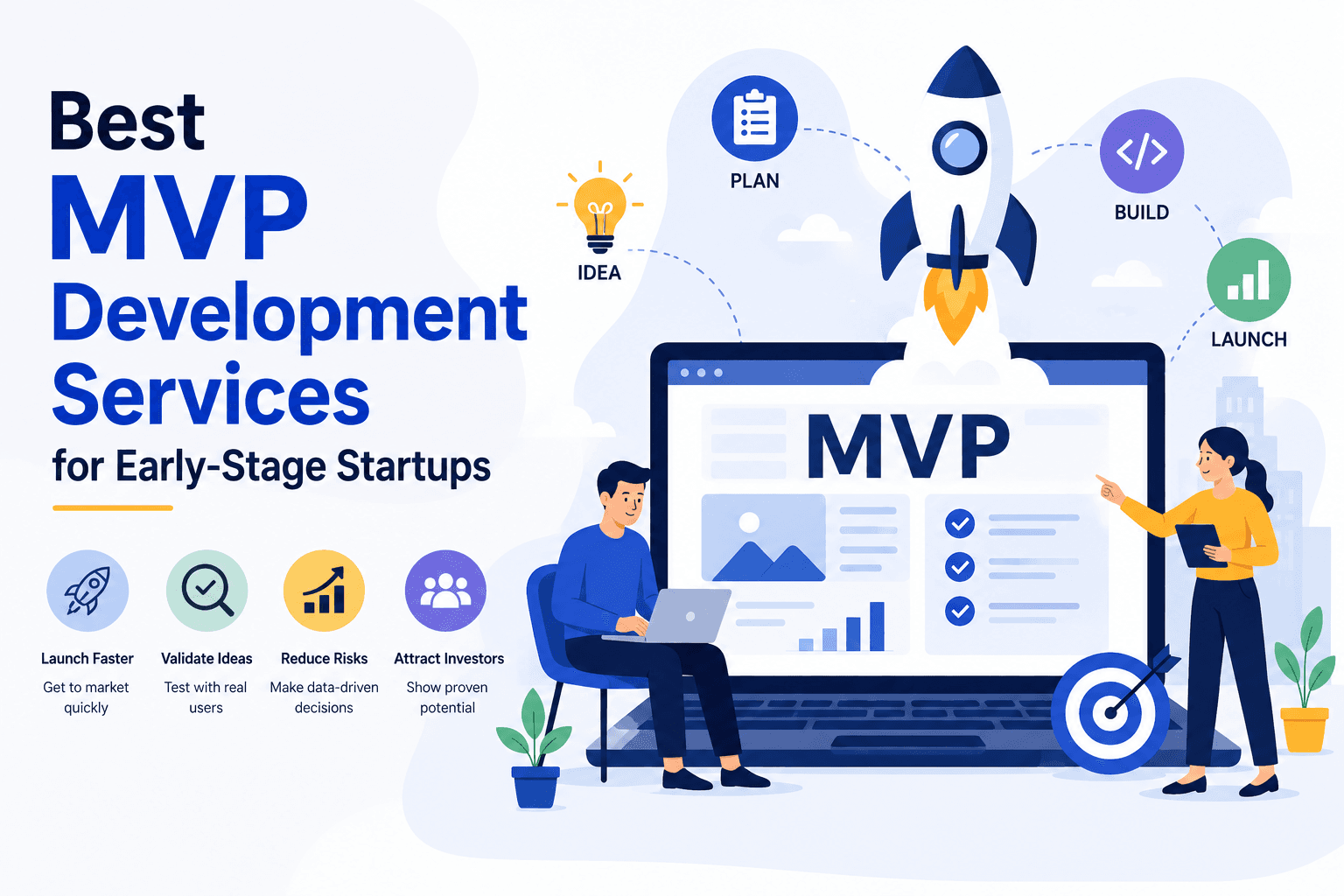
Benefits of MVP development include:
- Faster product launch
- Reduced development costs
- Early market validation
- Lower business risk
- Better investor attraction
- Data-driven product decisions
A well-built MVP enables startups to learn what users truly want before committing significant resources to full-scale development.
Why Choosing the Right MVP Development Company Matters
Not all development agencies understand startup challenges. Some focus solely on coding, while the best MVP development company acts as a strategic technology partner.
A professional MVP partner should help you:
- Validate your business idea
- Prioritize essential features
- Design user-centric experiences
- Build scalable architecture
- Launch quickly
- Support future product growth
Companies specializing in MVP development often combine product strategy, UX design, agile development, cloud deployment, and continuous iteration to maximize startup success.
10 Key Factors to Consider When Choosing the Best MVP Development Company
1. Evaluate Their Startup Experience
Building products for startups differs significantly from enterprise software development.
Look for an MVP app development company that has experience working with:
- Early-stage startups
- SaaS products
- Mobile applications
- Marketplace platforms
- AI-powered solutions
Ask for case studies demonstrating how they helped startups launch quickly and achieve market validation.
2. Assess Their Product Strategy Capabilities
The best MVP development companies don't simply write code.
They help startups:
- Validate business ideas
- Conduct market research
- Define user personas
- Prioritize MVP features
- Create development roadmaps
A company with strong product strategy expertise can save months of unnecessary development effort.
For startups looking for strategic planning and technical execution, consider exploring Product Strategy Services to align business goals with development efforts.
3. Review Their MVP Development Process
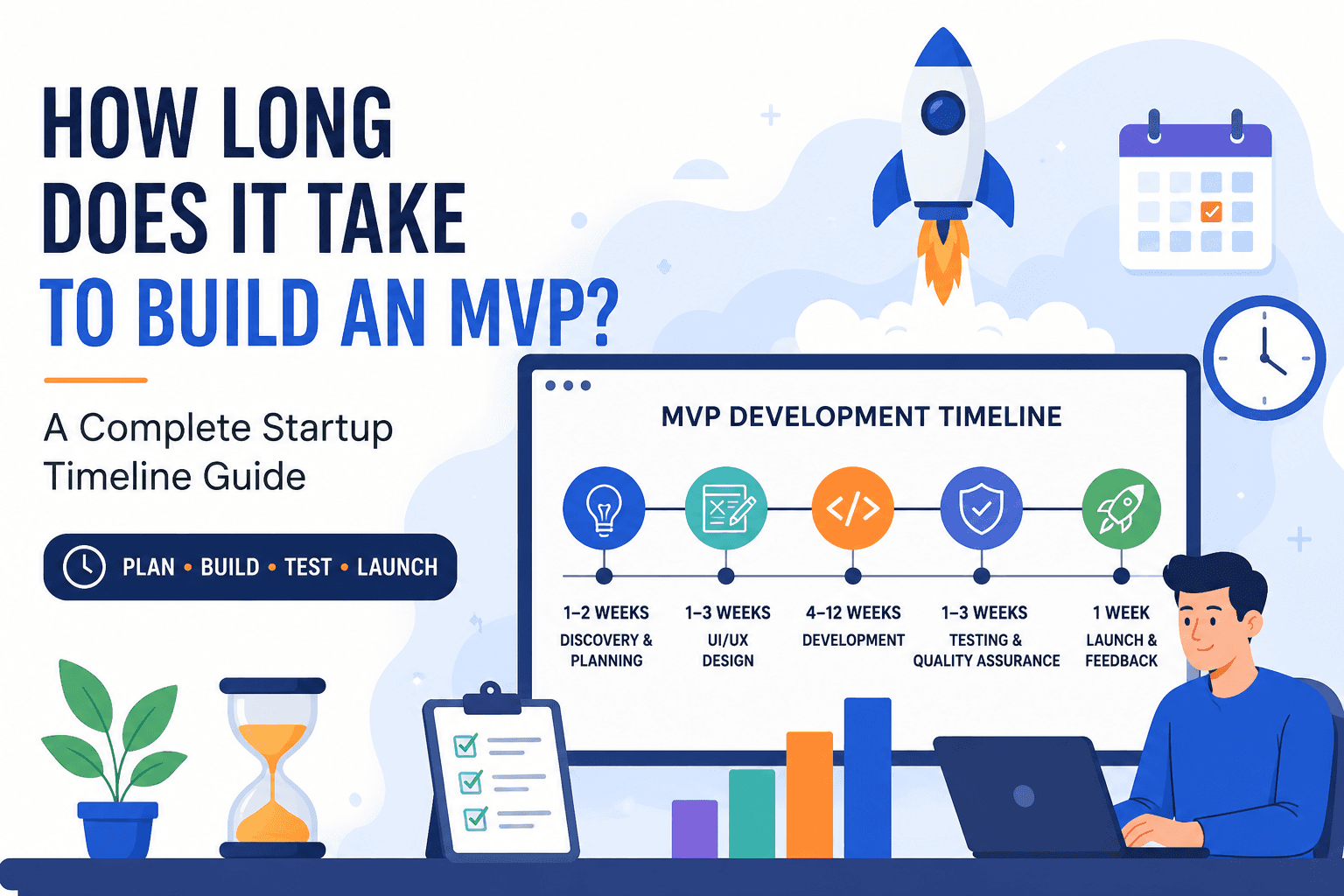
An effective startup MVP development process typically includes:
Discovery Phase
- Business analysis
- Market validation
- Competitor research
Design Phase
- Wireframes
- Prototypes
- User journey mapping
Development Phase
- Agile sprints
- Core feature implementation
- API integrations
Testing & Launch
- Quality assurance
- Deployment
- User feedback collection
Agile and iterative development approaches are widely recognized as best practices for MVP success.
4. Analyze Their Technical Expertise
Your MVP should be built on a technology stack that supports future scalability.
A quality MVP software development company should have expertise in:
- React.js
- Next.js
- Node.js
- Flutter
- React Native
- AWS
- Cloud Infrastructure
- AI Integrations
Technical excellence ensures your MVP won't require a complete rebuild after gaining traction.
You can review modern development approaches through Web App Development Services
5. Check Their Design and UX Capabilities
Many startups fail because users don't understand or enjoy using the product.
An experienced MVP product development company should provide:
- UI/UX design
- Wireframing
- Interactive prototypes
- User testing
A great user experience increases engagement, retention, and product adoption.
For user-focused design solutions, explore UI/UX Design Services
6. Verify Their Scalability Approach
Your MVP is just the beginning.
The development company should build:
- Modular architecture
- Scalable backend systems
- Flexible APIs
- Secure databases
This ensures your product can evolve into a full-featured platform without major redevelopment. Industry-leading MVP firms emphasize scalable architecture from day one.
7. Understand Their Communication Process
Strong communication is essential for startup success.
Ask:
- How often will updates be shared?
- Will there be dedicated project managers?
- How are changes handled?
- What project management tools are used?
Transparency reduces misunderstandings and keeps development aligned with business goals.
8. Evaluate Their Post-Launch Support
Launching an MVP is only the first milestone.
Choose a company that offers:
- Bug fixes
- Performance optimization
- Feature enhancements
- Ongoing maintenance
- Product scaling support
Reliable post-launch support ensures long-term success.
9. Review Client Testimonials and Case Studies
Before hiring any MVP development company, review:
- Clutch ratings
- Google reviews
- Startup success stories
- Portfolio projects
Look for measurable outcomes such as:
- Faster launch timelines
- User growth
- Funding achievements
- Revenue increases
Results speak louder than marketing claims.
10. Compare Pricing and Value
The cheapest option is rarely the best.
Instead, focus on:
- Development quality
- Strategic guidance
- Team expertise
- Long-term scalability
- Ongoing support
A reliable minimum viable product development partner helps reduce future costs by building the right product from the start.
Why Startups Choose Professional MVP Development Services
Professional MVP software development services provide:
- Faster validation
- Reduced development risks
- Better user experiences
- Stronger technical foundations
- Higher investor confidence
- Faster time-to-market
Startups that leverage expert MVP development often gain a competitive advantage by launching faster and learning from users earlier.
Final Thoughts
Choosing the best MVP development company can significantly impact your startup's success. The ideal partner will not only build your product but also guide your strategy, validate your idea, prioritize features, and prepare your business for future growth.
When evaluating providers, focus on startup expertise, technical capabilities, design excellence, scalability, communication, and long-term support. A strategic MVP partner can help you move from idea to market validation faster while minimizing risks and maximizing your chances of success.
If you're planning to build an MVP, explore comprehensive to accelerate your startup journey.
Frequently Asked Questions
The cost of MVP development varies based on complexity, features, integrations, and technology stack. Simple MVPs may cost significantly less than advanced products with AI, analytics, and custom workflows.
Most MVPs can be developed within 4 to 12 weeks, depending on feature requirements, design complexity, and development resources. Agile methodologies help accelerate delivery.
Popular MVP technologies include React.js, Next.js, Node.js, Flutter, React Native, AWS, PostgreSQL, and cloud-native infrastructure because they support rapid development and scalability.
They typically use frameworks such as MoSCoW prioritization, user story mapping, business impact analysis, and market validation data to identify essential features for the initial launch.
Yes. A properly architected MVP is designed with scalability in mind, allowing startups to add features, support more users, integrate advanced functionality, and evolve into a complete product without rebuilding from scratch.
8 min read

Dhruv Patel
Dhruv Patel is the CEO of Zyora Global, bringing a strong technology background and a passion for building scalable digital solutions. With expertise in software development, product strategy, and business growth, he leads the company in delivering innovative web, mobile, AI, and enterprise solutions that help businesses accelerate their digital transformation.